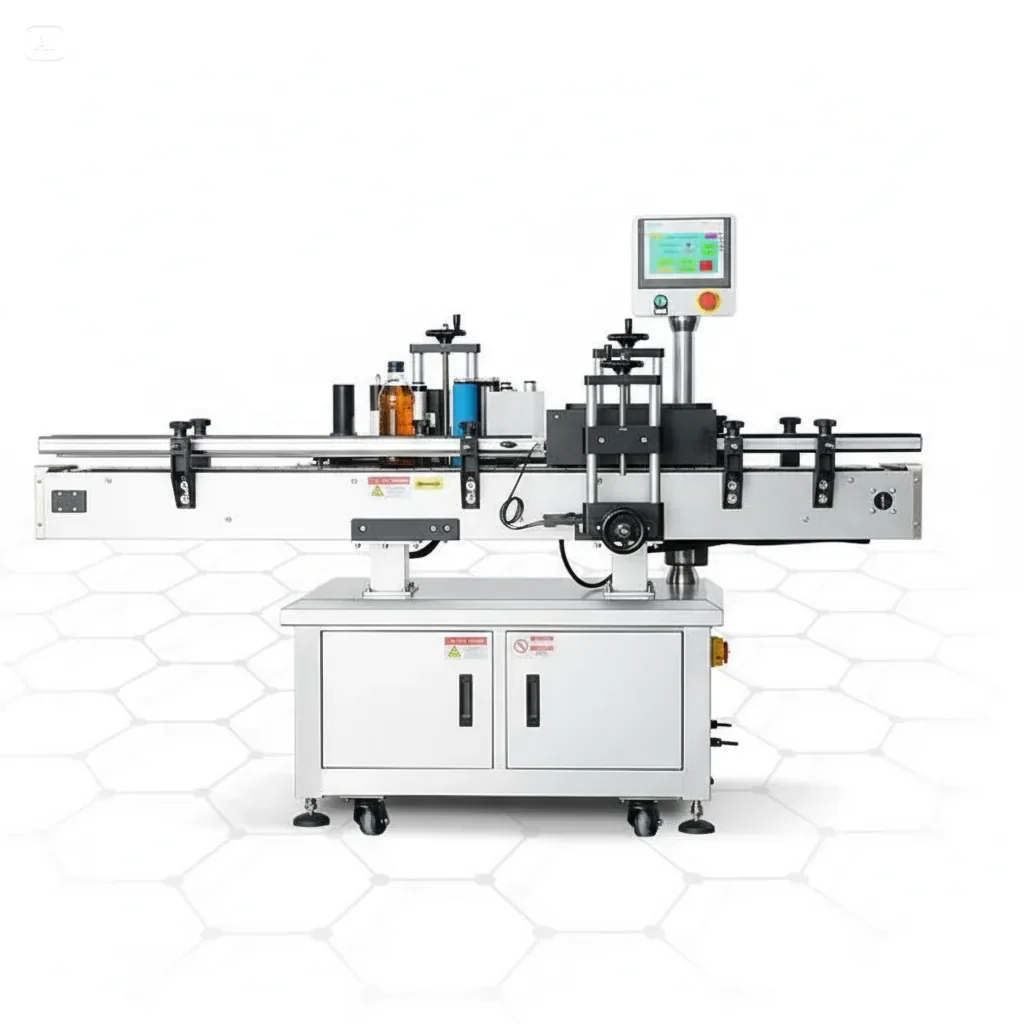
Round bottles
Automatic Wraparound Labeller
Inline label application for cylindrical bottles, jars and cans.
View machine
Maintenance guide
Practical maintenance points that help keep bottle labellers applying labels consistently.
Bottle labelling machine maintenance should focus on the parts that affect label feed, label sensing, bottle handling and wipe-down. Dust, adhesive build-up and inconsistent product guides can all affect label position.
Operators should also record successful settings for common bottles and label rolls so changeovers are faster and more repeatable.
Options include semi-automatic bench labellers, compact automatic labellers, inline wraparound systems, twin-side front and back labellers, top and bottom label applicators and integrated conveyor systems. The correct route depends on container shape, label position and production target.
Recommended routes
Select the closest machine route below or send samples for a final specification.
Round bottles
Inline label application for cylindrical bottles, jars and cans.
View machine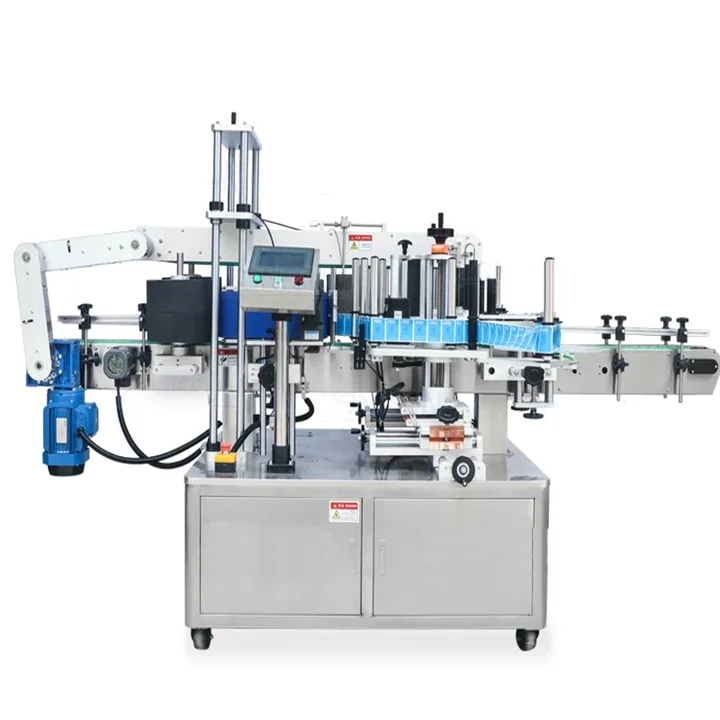
Two-sided labels
Front and back labelling for flat, oval, square and shaped containers.
View machine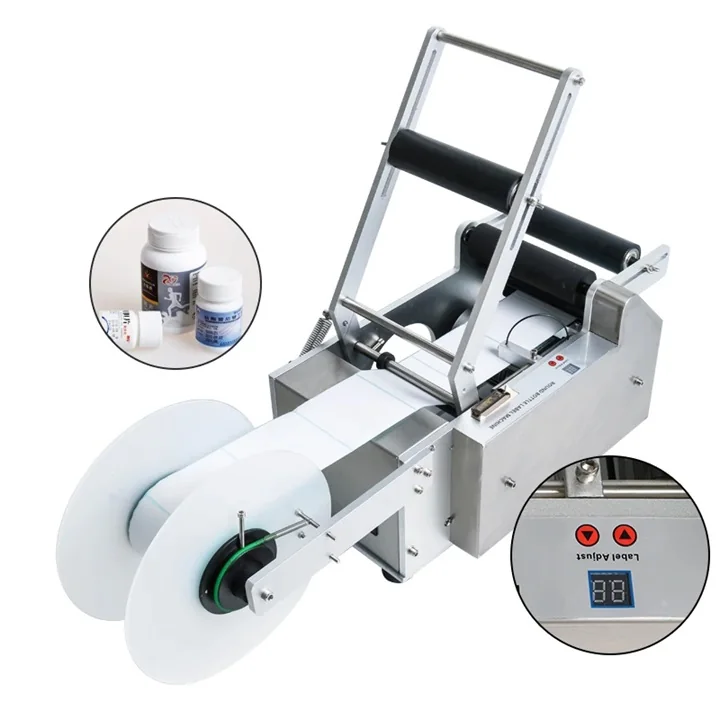
Short runs
Bench-top bottle label application for smaller production batches.
View machineBuyer questions
The suitable route depends on container shape, label position, label roll, required output and whether the machine is bench-top, compact automatic or fully inline.
Bottle or container dimensions, photographs, label size, roll direction, label material, target output and any coding or conveyor requirements are useful for a fast recommendation.
Clear labels may be possible when suitable transparent label sensing is specified and tested against the real label material and backing paper.
Automatic systems can usually be specified with conveyors and surrounding filling, capping, coding or inspection equipment when line details are supplied.
Related searches
Record the break position and reel reference before assuming a component has failed. Compare whether the issue began with a new reel or construction, and retain a sample showing the break. Keep access, threading and maintenance within the machine’s instructions and your site’s safe isolation procedure.
After making the equipment safe, have an authorised person inspect the approved web path, liner condition and take-up arrangement. Ask the converter to review suspicious liner damage or die-cutting. Do not compensate by increasing tension without knowing the cause.
Use the reel record to identify substitutions and material and liner compatibility to distinguish face appearance from backing behaviour. Prepare a maintenance enquiry with the safe-to-obtain evidence.