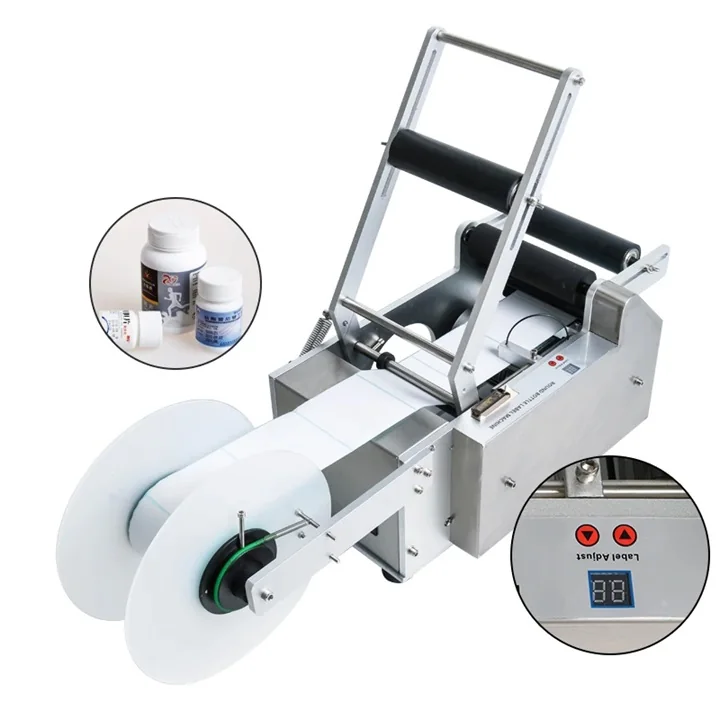
Short runs
Semi-Automatic Wraparound Labeller
Bench-top bottle label application for smaller production batches.
View machine
Specification guide
Estimate whether a semi-automatic, compact automatic or inline labeller is the right route for your required output.
Bottle labelling speed depends on container stability, label length, product spacing, operator loading, coding requirements and changeover time. A machine speed figure only makes sense when matched to real bottles and labels.
For many projects, the useful target is daily or batch output rather than a theoretical maximum speed. Lancing can help convert production targets into a practical machine route.
Options include semi-automatic bench labellers, compact automatic labellers, inline wraparound systems, twin-side front and back labellers, top and bottom label applicators and integrated conveyor systems. The correct route depends on container shape, label position and production target.
Recommended routes
Select the closest machine route below or send samples for a final specification.
Short runs
Bench-top bottle label application for smaller production batches.
View machine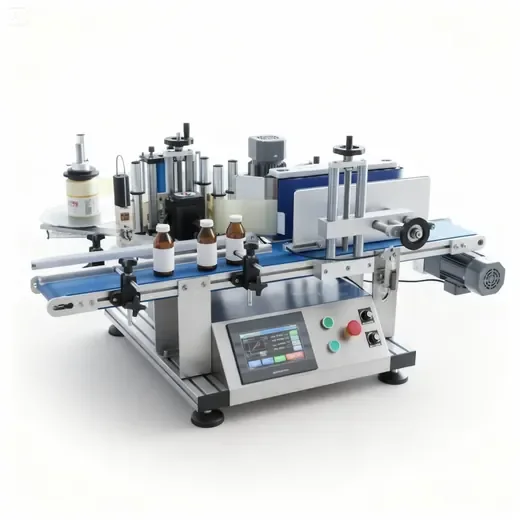
Compact automatic
A compact route for repeatable wraparound bottle and jar labelling.
View machine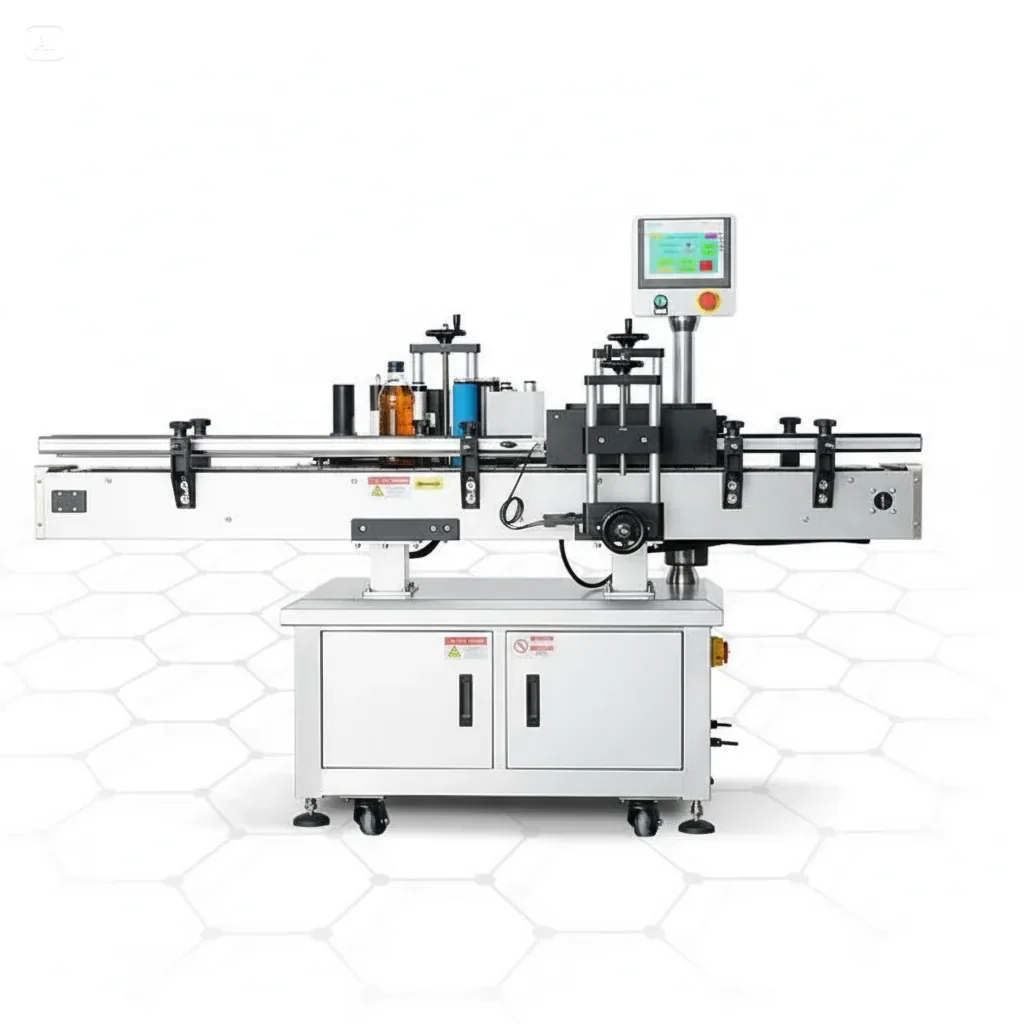
Round bottles
Inline label application for cylindrical bottles, jars and cans.
View machineBuyer questions
The suitable route depends on container shape, label position, label roll, required output and whether the machine is bench-top, compact automatic or fully inline.
Bottle or container dimensions, photographs, label size, roll direction, label material, target output and any coding or conveyor requirements are useful for a fast recommendation.
Clear labels may be possible when suitable transparent label sensing is specified and tested against the real label material and backing paper.
Automatic systems can usually be specified with conveyors and surrounding filling, capping, coding or inspection equipment when line details are supplied.
Related searches
The result is a planning value, not a machine-performance promise. It distinguishes the average rate across the available shift from the higher rate required while the labelling process is actually running.
—
This is the batch divided by all hours available.
—
—
—
Test the rate on the complete pack and line process. Use the bottle label size calculator to prepare the physical format and the sample-testing checklist to define evidence.
Include bottle and label samples, available hours, format changes, staffing and surrounding line speeds.
A productive-running percentage groups time losses into one assumption; a reel-change plan describes one specific source of those losses. Use either a measured overall allowance or an explicit breakdown, and avoid deducting the same reel stops twice. Neither approach turns a headline machine rate into guaranteed good-pack output.
The new reel-consumption calculator estimates labels required, new reels and in-batch changes from your inputs. Assess independent heads separately, then combine only the stops that actually occur at different times. Keep setup, inspection and rejected bottles visible in the wider production plan.
Send the batch schedule and stop assumptions alongside the proposed bottle and label formats when requesting a line specification.