
Bottle labelling guide
Label roll unwind direction checklist.
Check label orientation and unwind direction before ordering rolls for an automatic or semi-automatic bottle labeller.
The label must present correctly to the applicator.
Label rolls can be inside wound or outside wound and the printed artwork can face different directions. The machine needs the label to present correctly to the product at the point of application.
Incorrect unwind direction can delay commissioning or require labels to be rewound.
Check artwork orientation.
For wraparound labels, the first part of the label that meets the bottle may be the brand panel, ingredients panel or side of the artwork. For front/back labelling, each head may need a specific orientation.
If you are not sure, send the label specification or a photo of the roll before print production.
Record the backing web dimensions.
Backing paper width, core size and roll outside diameter affect whether the roll fits and tracks correctly on the machine. Label gap affects sensing and feed accuracy.
Checklist before you enquire
- Inside wound or outside wound label roll
- Artwork leading edge
- Roll core size and outside diameter
- Backing web width
- Label gap or pitch
- Label height and length
- Machine direction and product travel
- Separate front/back roll orientation
FAQ
Common questions.
What happens if roll direction is wrong?
The labels may need rewinding or the machine set-up may not be suitable.
Does roll direction matter for semi-automatic machines?
Yes, the label still needs to present correctly.
Should roll direction be checked before printing?
Yes. It is easier to confirm before labels are produced.
Can Lancing advise on roll orientation?
Yes. Send a label roll drawing, photo or sample.
Next steps
Related bottle labelling pages.
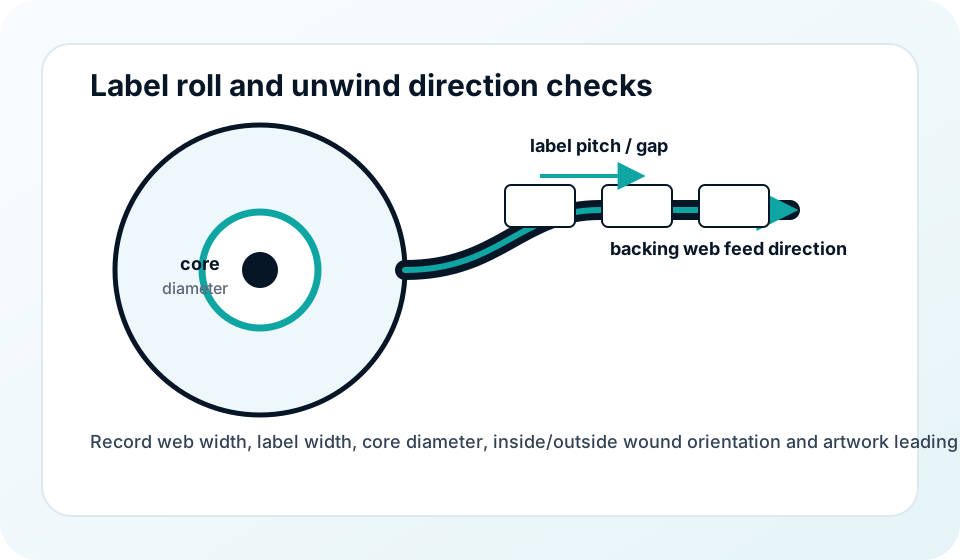
Label roll data sheet to complete before ordering labels.
Roll format is one of the easiest details to get wrong before the labeller is chosen. Record the core diameter, inside or outside wind, label gap, web width, liner type, label material and the artwork leading edge so the label presents correctly to the applicator.
Information gain for a faster answer
- Container: diameter or panel width, height, material, base shape, taper, shoulder shape and whether the container is empty or filled during labelling.
- Label: width, length, gap, roll direction, core diameter, liner type, transparent/opaque material and whether overprinting is required.
- Line: target output, operator involvement, conveyor direction, available space, coding position and any upstream filling or capping equipment.
| Question | Engineering reason | Next action |
|---|---|---|
| Is the container round, flat, oval, square or tapered? | Shape determines whether rotation, side guiding or top/bottom transfer is the main control point. | Compare machines |
| Is the label clear, metallic, small, wraparound or front/back? | Label material and gap determine sensing and setup checks. | Review sensing |
| Has the label roll already been printed? | Roll direction and artwork orientation may affect machine compatibility. | Check roll direction |
| Is presentation critical? | Premium labels, front/back matching and clear labels should be checked with samples before final specification. | Prepare samples |
For round bottles, start with wraparound labelling. For flat, oval and square containers, review front and back labelling. When in doubt, send photos and dimensions and Lancing can identify the better machine route.
Ready to have a labelling project checked?
Send bottle samples, label details or photos and the production target so Lancing can narrow the route.