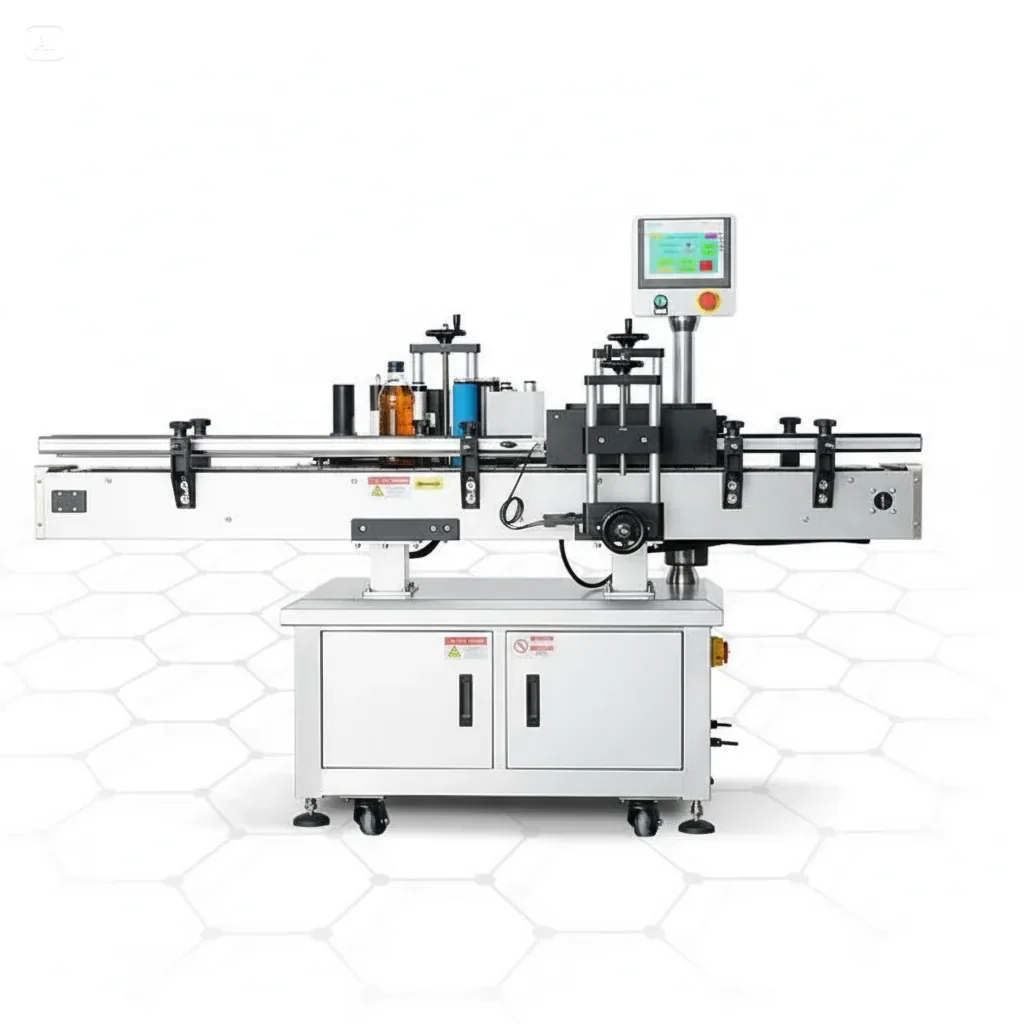
Round bottles
Automatic Wraparound Labeller
Inline label application for cylindrical bottles, jars and cans.
View machine
Clear label guide
Transparent labels need suitable sensing and real-roll testing before machine selection.
Clear and no-label-look labels can be harder to detect because the label edge may not be visible to a standard sensor. The liner material, label gap and adhesive can all affect sensing performance.
Testing with the actual label roll is the safest way to confirm sensing and placement before final machine specification.
Options include semi-automatic bench labellers, compact automatic labellers, inline wraparound systems, twin-side front and back labellers, top and bottom label applicators and integrated conveyor systems. The correct route depends on container shape, label position and production target.
Recommended routes
Select the closest machine route below or send samples for a final specification.
Round bottles
Inline label application for cylindrical bottles, jars and cans.
View machine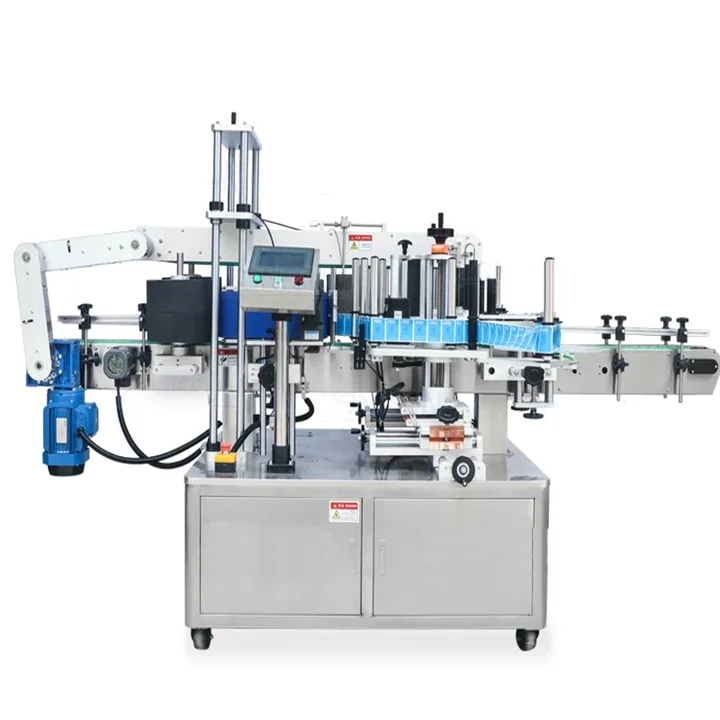
Two-sided labels
Front and back labelling for flat, oval, square and shaped containers.
View machine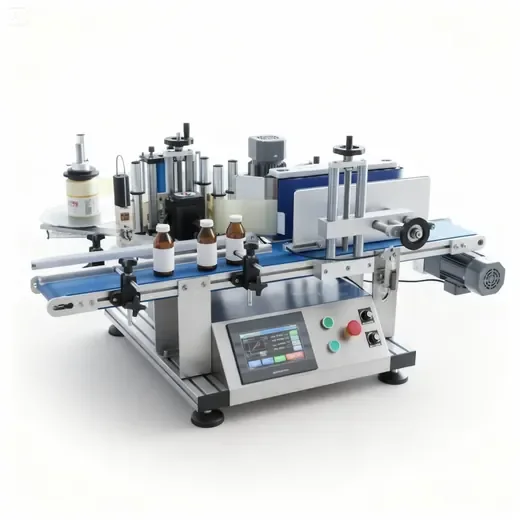
Compact automatic
A compact route for repeatable wraparound bottle and jar labelling.
View machineBuyer questions
The suitable route depends on container shape, label position, label roll, required output and whether the machine is bench-top, compact automatic or fully inline.
Bottle or container dimensions, photographs, label size, roll direction, label material, target output and any coding or conveyor requirements are useful for a fast recommendation.
Clear labels may be possible when suitable transparent label sensing is specified and tested against the real label material and backing paper.
Automatic systems can usually be specified with conveyors and surrounding filling, capping, coding or inspection equipment when line details are supplied.
Related searches
Clear labels can require a different sensing approach from standard paper or opaque labels. The actual label material, liner and printed artwork should be tested because transparency, varnish and background colour can affect detection.
| Question | Engineering reason | Next action |
|---|---|---|
| Is the container round, flat, oval, square or tapered? | Shape determines whether rotation, side guiding or top/bottom transfer is the main control point. | Compare machines |
| Is the label clear, metallic, small, wraparound or front/back? | Label material and gap determine sensing and setup checks. | Review sensing |
| Has the label roll already been printed? | Roll direction and artwork orientation may affect machine compatibility. | Check roll direction |
| Is presentation critical? | Premium labels, front/back matching and clear labels should be checked with samples before final specification. | Prepare samples |
For round bottles, start with wraparound labelling. For flat, oval and square containers, review front and back labelling. When in doubt, send photos and dimensions and Lancing can identify the better machine route.
Send bottle samples, label details or photos and the production target so Lancing can narrow the route.
Clear-label questions
Clear-label sensing should be established from the complete roll construction, not from artwork appearance alone. Browse the bottle labelling questions hub for deeper technical answers.
A standard gap sensor relies on a measurable change as the label and gap pass the sensing point. With a transparent face stock, the difference between label-plus-liner and bare liner may be too small or inconsistent for that sensor. A suitable transparent-label sensing method must be checked against the real roll.
Printed artwork may create contrast, but relying on it can make sensing dependent on artwork position, colour coverage and future design changes. The preferred reference should be stable across every label on the roll. Where a printed mark is intentionally used, its position and specification must be controlled with the converter.
Gap size, liner opacity, face-stock thickness and adhesive pattern all influence the signal available to the sensor. Small or variable gaps and inconsistent die cutting can make setup less robust. The label-roll coordination guide lists the information both suppliers should confirm.
Record the exact label-roll identity, sensor type and position, teach or threshold method, web path, dispense point and approved samples. These references help operators distinguish a genuine machine fault from a changed roll construction or incorrect setup during later production.
Send the actual face stock, liner, gap, artwork and representative bottles so the sensing and application method can be reviewed.
Test the actual finished construction through the chosen sensor and at the intended sensing track. A gap signal must remain reliable across the relevant printed areas, layers and liner. Local thickness or air spaces can make a representative reel more important than a single flat test piece.
Record the label reference, teach method and observed output using the sensor maker’s instructions. Check the opening tab and booklet area in the multi-layer application trial, and compare the face-and-liner choices in the material guide. See Leuze: optical and ultrasonic label detection for the different optical and ultrasonic detection approaches.
Transparent face stock is only one part of the detection problem. Print, varnish, adhesive, liner, gap geometry, static and the condition of the roll can all affect how a sensor sees the transition between labels.
| Material or condition | What can change detection | Evidence to supply |
|---|---|---|
| Clear face stock | Film thickness, optical properties, die-cut edge and whether the label is fully transparent or partly printed. | Production-equivalent roll from the intended label converter. |
| Print and varnish | Dense colour, white ink, metallic areas, foil, varnish or artwork crossing the sensing path. | Final artwork and labels printed using the intended process. |
| Adhesive and liner | Liner colour, opacity, texture, release coating and variation between material batches. | Normal production liner rather than an uncoated artwork proof. |
| Gap or registration feature | Small gaps, irregular die shapes, matrix remnants, perforations or a printed registration mark. | Several consecutive repeats showing normal die-cut and gap variation. |
| Roll and environment | Static, dust, moisture, curl, loose winding, splices and contamination around the label path. | An unspliced sample section plus notes on production and storage conditions. |
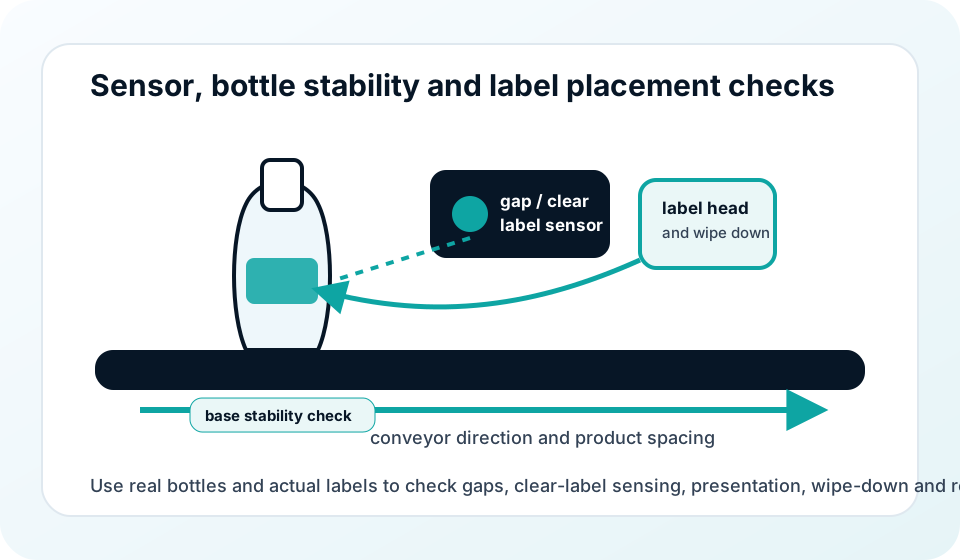
A sensor may detect every label correctly while the finished bottle still shows bubbles, skew or lifted edges. Detection should therefore be assessed separately from web tracking, dispense angle, bottle control, wipe-down and adhesive performance on the actual container surface.
Use the label roll direction guide to confirm the web and artwork orientation, then use the sample-testing checklist to evaluate the complete bottle and label process.
| Symptom | Check first | Do not assume |
|---|---|---|
| Occasional double feed or missed label | Sensor teaching, gap variation, web tension, roll tracking and the exact sensing path through printed areas. | That changing only the sensor sensitivity will correct a mechanical web problem. |
| Detection changes between label batches | Face stock, liner, varnish, die-cut and converter specification against the approved sample roll. | That labels described by the same generic material name are optically identical. |
| Label is detected but placement moves | Bottle sensor, product spacing, bottle stability, dispense point and application control. | That the clear-label sensor controls the bottle position. |
| Clear label applies with bubbles or silvering | Container cleanliness, surface energy, adhesive choice, wipe-down and environmental conditions. | That reliable gap detection proves adhesive suitability or finished appearance. |
Confirm detection on the label web, then review rotation, wipe pressure and the complete wrap on the wraparound labelling page.
Confirm each label roll independently and review front/back orientation and wipe-down on the front and back labelling page.
Include the real face stock, print, varnish, adhesive, liner, die-cut, gap and the intended production container.
Detection can depend on the face stock, liner, gap, registration mark, print coverage and web position. A hand-cut clear label or a different liner is not a reliable substitute for the intended production roll.
| Trial variable | Samples | Acceptance observation |
|---|---|---|
| Roll construction | Each intended face-stock, liner and supplier combination. | Stable detection of every label and gap or mark. |
| Artwork | Light, dark, metallic and varnished areas that pass the sensor. | No false trigger from print variation. |
| Web position | Normal and permitted lateral tracking range. | The intended sensing feature remains under the sensor. |
| Starts and stops | Initial feed, controlled restart and roll splice where applicable. | No repeated missing or double feeds. |
Record the result in the label-roll worksheet and include it in the FAT plan.