Automatic Twin Side Labeller
- Application
- Front/back on flat or round bottles
- Label type
- Paper or film; normal and transparent labels
- Controls
- PLC with touchscreen HMI
- Voltage
- Typically 220 V
- Options
- Date coder, inspection, clear-label sensor

Front and back labelling
High-speed twin-side labelling for front and back labels on bottles, jars, flat packs and shaped containers.
Need a bottle labelling machine specified quickly? Send bottle dimensions, label size and output target.
Request specification adviceCall 01494 623015Overview
Automatic front and back labelling for flat, oval, square and selected round containers requiring two labels in one pass.
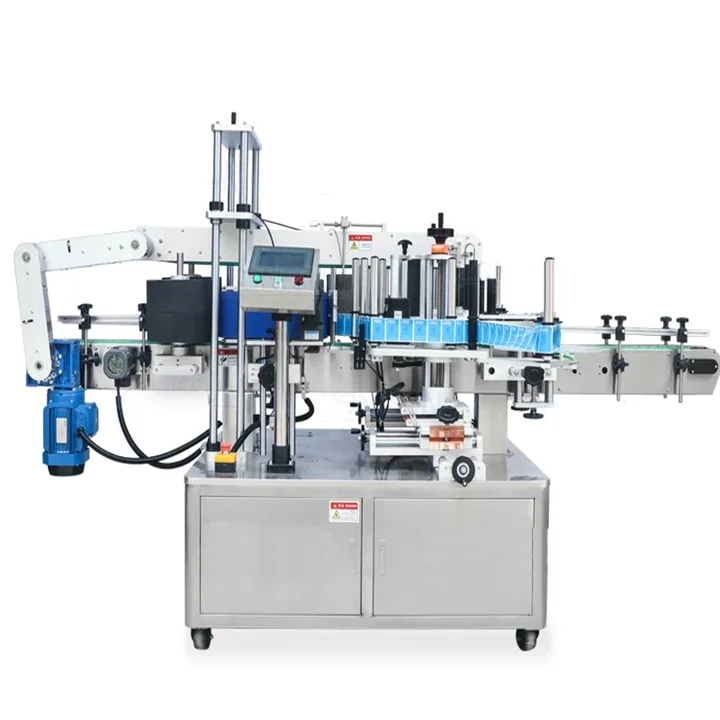
Technical specifications
Final machine dimensions, throughput and options are confirmed against the bottle, label roll, samples and surrounding line equipment.
Integration
Lancing can supply labelling machinery as a standalone unit or integrate it into broader packaging lines with filling, capping, coding, conveyors, inspection and end-of-line handling.
Buyer questions
Send container dimensions, label details and target output. Lancing can normally narrow the correct labelling route from samples, photos and line information.
Yes. Lancing can discuss integration with filling, capping, coding, inspection, conveyors and end-of-line handling.
Samples are strongly recommended because bottle shape, taper, label material, roll direction and handling stability affect the final configuration.
Speak to Lancing
Send samples, label details and speed requirements so the machine can be matched to your container rather than selected from a generic model number.
This added section gives the practical selection detail searchers need without changing the existing machine page above.
The Automatic Twin Side Labeller route is most relevant to flat, oval, square and shaped bottles where separate front and rear labels need to be applied in one pass. It should be checked against the actual container rather than only a drawing, because presentation, base stability and label surface can change how consistently the label is applied.
Selection normally depends on side guidance, label head alignment, front/back registration and container presentation. Where clear labels are involved, Lancing should review the label material and backing liner so the sensing method is suitable before the machine is ordered.
Changeover planning should include bottle guides, label roll loading, sensor position, label height, job memory or operator settings where fitted, and safe access to the label path for routine cleaning and roll changes.
| Information to send | Why Lancing needs it | Related page |
|---|---|---|
| Container dimensions, photos and sample bottles | Confirms whether the pack can be controlled repeatably through the labelling point. | Sample testing |
| Label width, length, gap, web width and core diameter | Confirms the label roll can feed and present correctly through the label head. | Label roll guide |
| Clear label, metallic label or unusual liner details | Identifies whether specialist sensing or extra setup checks are required. | Clear-label sensing |
| Batch code, date code or barcode position | Shows whether coding needs to be integrated before, during or after label application. | Coding integration |
| Target output and upstream/downstream equipment | Helps match the labeller to the rest of the line and avoid bottlenecks. | Compare labelling routes |
If the bottle is genuinely cylindrical and needs a single wrap label, compare this with the wraparound labelling page.
Use the buyer guide to compare container shape, automation level and label position before confirming the preferred route.
Actual placement-accuracy trial results, customer case studies and sample test data should only be published when Lancing has verified first-party evidence. In the absence of recorded figures, the safe approach is to define a test pack, label material, target output and acceptance criteria before running samples.
Send product photos, label details, line layout and the output you need.
Twin-side questions
A twin-side labeller depends on repeatable pack presentation before, between and after both label application points. Browse the bottle labelling questions hub for deeper technical answers.
The handling system must use repeatable physical features such as stable side panels, a base profile or a controlled infeed orientation. A camera or special orienting device may be considered for applications that cannot be presented mechanically, but suitability has to be confirmed from the real bottle and required label datum.
Each label head may need its own web path, sensor setup, dispense position and wipe-down adjustment. Different face stocks or liners can behave differently even when the labels are visually matched. Both production rolls should therefore be supplied for trial, and each roll specification should be controlled separately.
Approve a first-off bottle against the agreed datum, then check several packs taken after normal running has stabilised. Measure each label and their relationship using the same method as the original acceptance trial. The guide to accuracy and repeatability explains why one good sample is not enough.
Irregular bottle spacing, conveyor transfers, guide pressure, unstable fill, cap interference and downstream back-pressure can all change pack orientation. Troubleshooting should therefore include the path into and out of the label heads, not only sensor and dispense settings.
Send filled or representative bottles, both label rolls, a placement reference and details of the existing conveyor line.
The machine must control the bottle through both label heads, but the installed project also needs defined guard boundaries, access for roll changes, upstream and downstream stop behaviour, approved front/rear datums and a safe method for clearing or recovering product after a fault.
| Acceptance area | Evidence to agree |
|---|---|
| Product orientation | The bottle feature or panel used as the datum, how it is controlled and what happens when the feature is missing or inconsistent. |
| Two-label relationship | Approved front and rear samples, measurement method, label gap or angular relationship and cosmetic rejection criteria. |
| Access and changeover | Safe access to label rolls, sensors, guides and wipe components without compromising guarding or setup repeatability. |
| Line recovery | Response to missing labels, downstream stops, loss of product spacing and bottles remaining between the two application points. |
Use the compliance and documentation guide and front and back positioning guide when defining acceptance.
Send the bottle orientation feature, both label artworks, line layout and required recovery behaviour.
A twin-side labeller applies two separate labels, so artwork approval must preserve the intended relationship between the bottle datum, front label, rear label, barcode and any variable code. Correct individual label dimensions do not by themselves prove the finished pack.
Define the physical feature used to orient the pack, then dimension both label positions from the same datum and inspection view.
Record label size, pitch, web, core, winding and artwork leading edge for each roll. Do not assume the front and rear reels are interchangeable.
Place the barcode on a flat or consistently curved area, preserve quiet zones and define whether inspection checks presence, readable content or a verified quality grade.
Use the bottle and panel measurement guide with the barcode placement guidance before artwork sign-off.
Send the oriented bottle, both roll drawings, code requirement and the agreed front/rear inspection method.
Assess the front and rear construction independently, even when they run in the same pass. A decorative front film and a thicker information label can differ in release, sensing and pressure requirements. Their final relationship must still be measured from the same container datum.
Mark the permitted contact areas for each side, including any reseal tab. Confirm that guides and hold-down arrangements support the bottle without fouling the new label. Include downstream inspection and the first bottle after either head has been replenished.
Use the booklet-label trial framework and separate-head reel planning. Provide both drawings and production-equivalent reels for a configuration assessment; ordinary front/back operation alone does not prove booklet suitability.
Popular searches
The two label heads are adjusted independently, but the finished presentation is judged as one pack. Bottle orientation, panel geometry, label artwork and the handling path between both heads should therefore be specified together.
| Specification area | Information required | Why it matters |
|---|---|---|
| Front datum | Mark the feature that defines the front face, the label centreline and the required height. | Establishes how the bottle must be orientated and controlled before the first head. |
| Rear relationship | State whether the rear label is centred opposite the front, aligned to an edge, offset deliberately or registered to another pack feature. | Prevents an assumed 180-degree relationship being applied to a design that uses a different visual datum. |
| Panel limits | Record usable flat or gently curved width, corner radii, taper, recesses, handles and mould details. | Confirms that each label can be wiped down without bridging an unsuitable edge or surface transition. |
| Two label rolls | Provide separate width, length, web, core, unwind, gap, liner, material and artwork-leading-edge data for each roll. | Allows both label heads and sensors to be specified from the actual materials. |
| Product control | Identify cap, pump or trigger height, bottle flexibility, filled weight, base stability and any existing orientation method. | Determines guide, top-hold and product-separation requirements through both application points. |
Show how bottles leave the filler, capper or upstream conveyor. Containers that arrive touching, rotated or leaning may require separation and stabilisation before labelling. If an asymmetric closure defines the front, explain whether it is already orientated or must be ignored by the labeller.
State the bottle material, surface finish and whether the label crosses a curved edge. Flexible containers should be supplied filled when that reflects normal production. The pressure needed to wipe the label onto the surface must not deform the pack or change its orientation.
List every container and both label sets. Record guide positions, top-hold height, head height, sensor position and the first-off registration check for each format. A changeover is complete only after both sides meet the agreed visual standard.
Include conveyor height and direction, coding positions, inspection requirements, downstream accumulation and any reject process. If codes are printed on the label before application, confirm which head and which label carries the variable information.
| Test stage | What to observe | Acceptance evidence |
|---|---|---|
| Product presentation | Bottle enters squarely and remains controlled without marking or excessive pressure. | Video and first-off sample from each agreed format. |
| Front label | Height, centring, skew, adhesion and relationship to the front datum. | Approved marked sample or drawing. |
| Rear label | Height, centring, skew and relationship to both the rear panel and the front label. | Approved labelled sample viewed from front, rear and above. |
| Restart and changeover | Registration after a normal stop, roll change and format change. | Documented setup values and an agreed first-off inspection routine. |
Prepare the project with the front/back positioning guide, the enquiry checklist and the sample-testing checklist. For smaller two-sided applications, compare the Compact Twin Side Labeller.
Include marked front and rear datums, both label rolls, filled samples where relevant and a layout of the surrounding line.
Two label heads can place accurately only when the product reaches them in a controlled orientation. Identify the feature that defines the front face and check how the pack behaves under guide, belt and conveyor contact.
Define the face, seam, handle, closure or mark that determines orientation.
Specify front and rear reel details separately, including winding and artwork leading edge.
Approve one finished pack showing both label heights and their intended front/rear relationship.
Include format change, stop/restart and any code or inspection recipe in the acceptance plan.
Prepare the project with the positioning guide and FAT checklist.