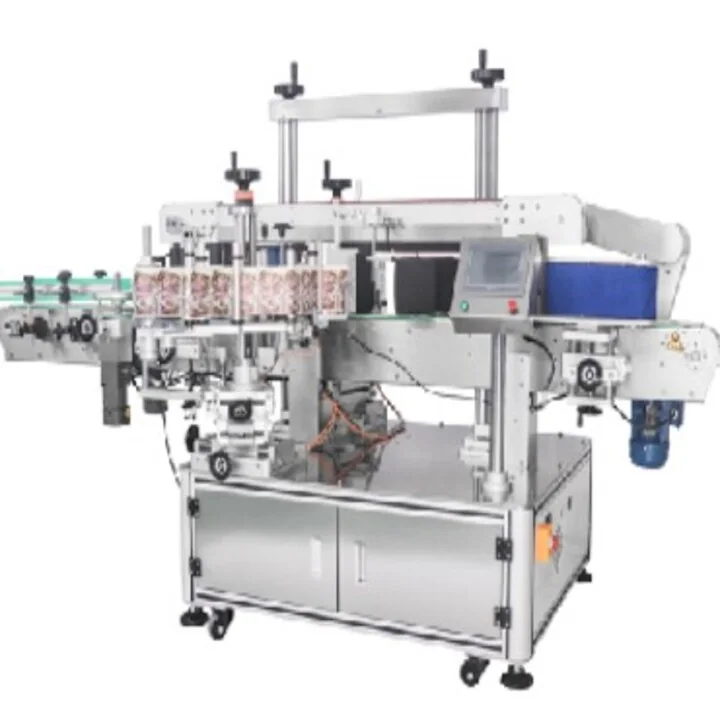
Compact front/back labelling

Compact Twin Side Labeller

Space-saving front and back labelling route for bottles and containers where a full inline automatic line is not required.

Need a bottle labelling machine specified quickly? Send bottle dimensions, label size and output target.

Request specification adviceCall 01494 623015

Overview

Built for repeatable label placement.

Compact twin-side label application for lower-volume production, trials and factories with limited floorspace.

  • Configurable flat-bottle and round-bottle modules
  • Supports front/back labelling or wrap-style application depending on setup
  • Compact tabletop/line-side footprint
  • Recipe storage and simple setup for repeat jobs
  • Suitable for cosmetic, chemical, food and healthcare packaging
Compact Twin Side Labeller machine image

Technical specifications

Reference data for specification discussions.

Final machine dimensions, throughput and options are confirmed against the bottle, label roll, samples and surrounding line equipment.

Compact Twin Side Labeller

Application
Compact twin-side labelling
Container type
Flat, oval, square or round, configuration dependent
Label type
Paper, film and selected clear labels
Controls
Touchscreen setup
Best suited to
Lower-volume lines and product trials

Information to send

Container
Diameter/width, height, shape and photos
Label
Size, roll direction, material, backing and gap
Production
Target bottles per hour and operator process
Line
Filler, capper, coder, conveyor and inspection details

Integration

Specified as a machine or as part of a line.

Lancing can supply labelling machinery as a standalone unit or integrate it into broader packaging lines with filling, capping, coding, conveyors, inspection and end-of-line handling.

Buyer questions

Questions before specifying this labeller

How quickly can I get advice on this machine?

Send container dimensions, label details and target output. Lancing can normally narrow the correct labelling route from samples, photos and line information.

Can this labeller be supplied as part of a full line?

Yes. Lancing can discuss integration with filling, capping, coding, inspection, conveyors and end-of-line handling.

Do I need to send samples before ordering?

Samples are strongly recommended because bottle shape, taper, label material, roll direction and handling stability affect the final configuration.

Speak to Lancing

Configure the Compact Twin Side Labeller for your product.

Send samples, label details and speed requirements so the machine can be matched to your container rather than selected from a generic model number.

Specification support

How Lancing checks a Compact Twin Side Labeller project before quotation.

This added section gives the practical selection detail searchers need without changing the existing machine page above.

Suitable work

The Compact Twin Side Labeller route is most relevant to flat, oval, square and shaped bottles where separate front and rear labels need to be applied in one pass. It should be checked against the actual container rather than only a drawing, because presentation, base stability and label surface can change how consistently the label is applied.

Machine control points

Selection normally depends on side guidance, label head alignment, front/back registration and container presentation. Where clear labels are involved, Lancing should review the label material and backing liner so the sensing method is suitable before the machine is ordered.

Changeover and access

Changeover planning should include bottle guides, label roll loading, sensor position, label height, job memory or operator settings where fitted, and safe access to the label path for routine cleaning and roll changes.

Information to sendWhy Lancing needs itRelated page
Container dimensions, photos and sample bottlesConfirms whether the pack can be controlled repeatably through the labelling point.Sample testing
Label width, length, gap, web width and core diameterConfirms the label roll can feed and present correctly through the label head.Label roll guide
Clear label, metallic label or unusual liner detailsIdentifies whether specialist sensing or extra setup checks are required.Clear-label sensing
Batch code, date code or barcode positionShows whether coding needs to be integrated before, during or after label application.Coding integration
Target output and upstream/downstream equipmentHelps match the labeller to the rest of the line and avoid bottlenecks.Compare labelling routes

When another labeller may be better

If the bottle is genuinely cylindrical and needs a single wrap label, compare this with the wraparound labelling page.

Use the buyer guide to compare container shape, automation level and label position before confirming the preferred route.

Sample trial note

Actual placement-accuracy trial results, customer case studies and sample test data should only be published when Lancing has verified first-party evidence. In the absence of recorded figures, the safe approach is to define a test pack, label material, target output and acceptance criteria before running samples.

Ask Lancing to check whether this compact front and back labeller suits your pack.

Send product photos, label details, line layout and the output you need.

Send project details

Popular searches

Bottle labelling machine pages built around common buyer searches.

Compact two-sided setup

Protect reel access and product control inside a restricted footprint.

When space is limited, show the operating side, reel-change envelope, container infeed and outfeed, and the access needed to set both label heads. A compact layout should not force awkward web threading or conceal the point where an unstable bottle loses orientation.

Send with the layout

  • Smallest and largest shaped containers.
  • Front and rear label-roll specifications.
  • Operator position and conveyor direction.
  • Available footprint and nearby guards or walls.

Approve at trial

  • Container orientation and stability.
  • Each label independently.
  • The relationship between both labels.
  • Repeat setup after a representative changeover.

Use the site preparation guide and label-roll worksheet.