Materials and machine compatibility

Paper or film: which bottle label material suits your machine?

Choose the label face, adhesive and liner as a complete construction. Appearance alone does not tell you whether a label will dispense, stay flat or withstand the pack’s intended use.

Should bottle labels be paper or film?

Paper and film can both be suitable for machine-applied bottle labels. Choose against the bottle’s flexibility, moisture exposure, finish and printing needs, then confirm that the complete label releases from its liner and runs through the chosen applicator. A paper-versus-plastic choice alone does not establish adhesive suitability, sensor compatibility or achievable output.

Face stock is the printable surface; the adhesive bonds it to the bottle; the release liner carries the labels until dispensing. Lamination, varnish, inks and die-cutting also affect the finished construction. Ask the converter for all these details rather than ordering by a material name or photograph.

Material manufacturers offer different paper and film grades for different environments. For example, moisture-resistant paper exists, so “paper” should not automatically be read as “dry use only”. Equally, a film face does not make every adhesive or printed finish water-resistant. See UPM: moisture-resistant label paper and UPM Raflatac: film label materials.

Compare the construction against the bottle

Label-material decisions for machine application
CandidateBuyer decisionWhat to prove
Paper labelTexture, opacity and printed appearance; select the specific grade for the exposure.Release at the peel edge, resistance to scuffing and the complete label’s behaviour after storage or moisture exposure.
Polypropylene (PP) filmA film option to assess for stable bottles and the required clear or opaque finish.The selected grade’s stiffness, curvature fit, sensing and finished adhesion; do not assume every PP film behaves alike.
Polyethylene (PE) or conformable filmA candidate when a bottle’s sidewalls move during handling or dispensing.Dispensing stiffness as well as flexibility on the filled pack, including squeeze-and-release testing.
Laminated, metallic or textured constructionAppearance and protection requirements may alter the original face material’s behaviour.Finished thickness, liner release, sensor response and code readability on production-equivalent reels.

Conformability and reliable dispensing are different requirements. A construction must follow the bottle after application but also separate predictably from the backing during application. UPM: balancing film conformability and dispensing stiffness describes this balance; it is a reason to trial the chosen grade, not to assume that a polymer name proves machine suitability.

Can the same labeller run paper and film labels?

A bottle labeller may run several label materials, but the change needs checking at the unwind, sensor, peel edge, wipe-down and liner take-up. Keep the approved bottle and label drawing fixed while comparing constructions, so an artwork-size or bottle change is not mistaken for a material effect.

  1. Confirm the reel. Match web width, core, outside diameter, pitch, unwind direction and leading edge to the agreed machine specification.
  2. Check label release. Observe whether the label separates cleanly rather than following the liner or lifting too early. Follow the machine instructions for adjustments.
  3. Prove sensing. Test the printed label and liner together, including clear areas, foil and coatings.
  4. Check first contact and wipe-down. Note where creases, bubbles or edge lift begin rather than increasing pressure indiscriminately.
  5. Check the finished pack. Inspect after the agreed dwell and handling conditions, including filling state, squeezing or condensation where relevant.

Optical and ultrasonic sensors use different detection principles. Leuze: optical and ultrasonic label detection explains why transparent and more complex constructions can require a different sensing approach. Neither the word “clear” nor “film” alone identifies the right sensor.

Use the clear-label sensing guide and label-roll specification worksheet for the machine-side checks.

Questions about squeezing, moisture and label changes

Will a film label stop wrinkling on a squeezable bottle?

Not necessarily. Wrinkling can involve the selected face construction, adhesive, label area, bottle movement and the point in the filling process where application takes place. Test the filled and closed pack through the intended squeeze-and-release cycle. A more flexible label is not automatically easier to dispense, and a stronger adhesive is not a substitute for a suitable construction.

Are paper labels unsuitable for chilled bottles?

No universal conclusion follows from the word paper. Compare the specified paper grade, ink protection and adhesive against moisture at application and exposure later in use. The machine needs a repeatable application condition; an acceptable label on a dry room-temperature bottle does not prove the chilled production pack.

Must a material change be treated as a new machine trial?

Treat a change of face stock, adhesive, liner, coating or supplier as a change requiring verification, even when the artwork dimensions stay the same. Retain an approved reference reel and finished bottle, identify what changed, and compare dispensing, sensing, placement and adhesion before releasing the new material for routine production.

Does choosing paper prove that the finished bottle pack is recyclable?

No. Do not derive a whole-pack environmental claim from the label face alone. Bottle material, adhesive, decoration, separation behaviour and the actual collection and recycling route need assessment. Obtain application-specific evidence before making a recyclable or other environmental claim.

For related variables, see label adhesion and bottle surfaces and cold and condensing bottle labelling.

Compare real constructions before ordering reels

Send the bottle in its normal filled state, the intended label position, the converter’s construction reference, production-equivalent reels and the expected handling environment. Lancing can review the machine application; material and adhesive suitability must also be agreed with the label supplier.

Connect the label specification to the machine enquiry

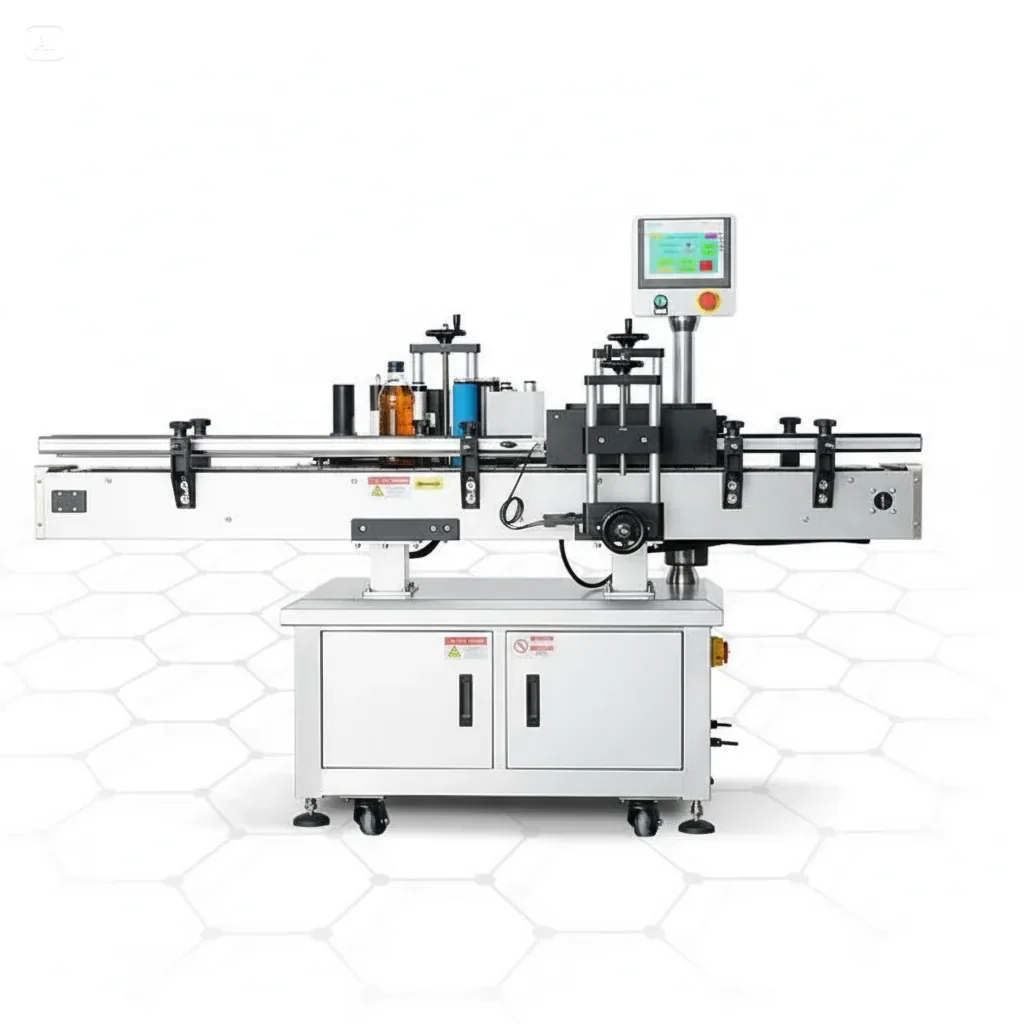
Lancing automatic wraparound bottle labelling machine

Illustration from the Lancing website. The actual bottle, finished label construction and approved machine configuration determine suitability.

Application guidance from Lancing. This page distinguishes planning checks from a verified machine specification; results must be confirmed against representative samples.

Technical reference sources