Bottle presentation
The pack must remain upright and repeatable through guides, sensors and wipe-down even when the surface is slippery or the bottle rigidity changes with temperature.

Cold and wet bottle conditions
A reliable result starts by controlling the bottle surface condition at the label application point, then proving the label construction and machine setup on real production samples.
Need a bottle labelling machine specified quickly? Send bottle dimensions, label size and output target.
Request specification adviceCall 01494 623015Cold or condensing bottles can be labelled successfully, but the application point, bottle temperature, visible moisture, adhesive, face material, wipe-down and inspection timing must be assessed together. A dry room-temperature trial does not prove a chilled or wet production application.
The first decision is whether the bottle can reach the labeller with a repeatable surface condition. If moisture forms after filling, rinsing, chilling or movement into a warmer room, the project may need a different application point, controlled drying or conditioning, a label construction selected for the real environment, or a combination of these measures.
Machine adjustment cannot compensate indefinitely for water between the adhesive and the bottle. The label converter and machine supplier should review the same samples, production temperatures and end-use conditions before production rolls are committed.
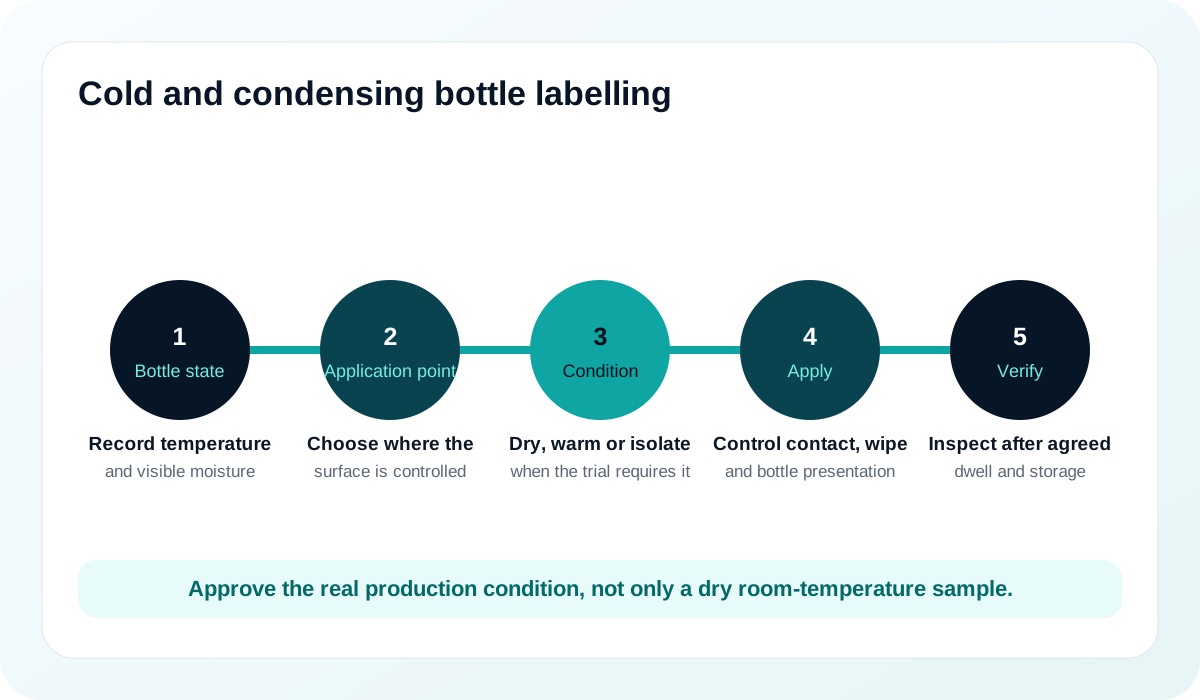
Moisture affects the first contact between the pressure-sensitive adhesive and the pack. Temperature can also change bottle rigidity, static, liner release and the rate at which the adhesive builds its bond.
| Observed condition | Likely project risk | Evidence to obtain |
|---|---|---|
| Visible beads or a continuous moisture film | The adhesive may contact water rather than the bottle, causing slip, bubbles or edge lift. | Photographs at the application point, bottle temperature, room conditions and a representative production label roll. |
| Bottle is dry at filling but condenses before labelling | A layout or dwell-time change can alter the surface condition before the label reaches the pack. | A timed process map from filling or chilling to label application. |
| Flexible plastic bottle becomes softer when warm or changes after filling | Guides and wipe pressure may distort the panel or shift the label datum. | Filled and empty samples at normal production temperature. |
| Labels look acceptable immediately but lift later | The initial application may be adequate while the adhesive, storage condition or bottle surface is not suitable for the agreed end use. | Inspection at the agreed dwell points and after representative storage or handling. |
| Only some bottles are wet | Intermittent moisture creates an unstable process that is difficult to solve with a fixed machine setting. | Worst-case bottles and a record of when the variation occurs. |
The pack must remain upright and repeatable through guides, sensors and wipe-down even when the surface is slippery or the bottle rigidity changes with temperature.
Record where the label first touches, how pressure is applied and whether moisture is displaced or trapped. More pressure is not automatically the correct remedy.
Test bottles that wait during normal line stops. A stationary cold bottle may accumulate more moisture than one moving continuously through the labeller.
Use the label adhesion and bottle surface guide to separate surface and construction issues, the sample-testing checklist to plan evidence and the wraparound machine guide when the pack is cylindrical.
Send representative bottles, labels and the process timing so Lancing can assess the machine route and the evidence needed for a trial.
Use the related guides to define the pack, label roll, trial and machine route before requesting a final configuration.
Match container shape, label arrangement, automation level and line interfaces.
Open buyer guideRecord size, pitch, web, core, winding, liner and sensing information.
Open worksheetPlan representative bottles, labels, formats and acceptance evidence.
Open checklist