Automatic Wraparound Labeller
- Typical throughput
- Up to ~6,000 bph
- Container type
- Round bottles, jars and cans
- Label types
- Paper, film, normal or transparent
- Controls
- Touchscreen PLC
- Integration
- Filling, capping and conveyor lines

Wraparound bottle labelling
High-speed inline wraparound labelling for round bottles, jars and cans, with rotary electric clamping and line integration.
Need a bottle labelling machine specified quickly? Send bottle dimensions, label size and output target.
Request specification adviceCall 01494 623015Overview
Automatic wrap-around labelling for cylindrical containers requiring consistent presentation and higher output.
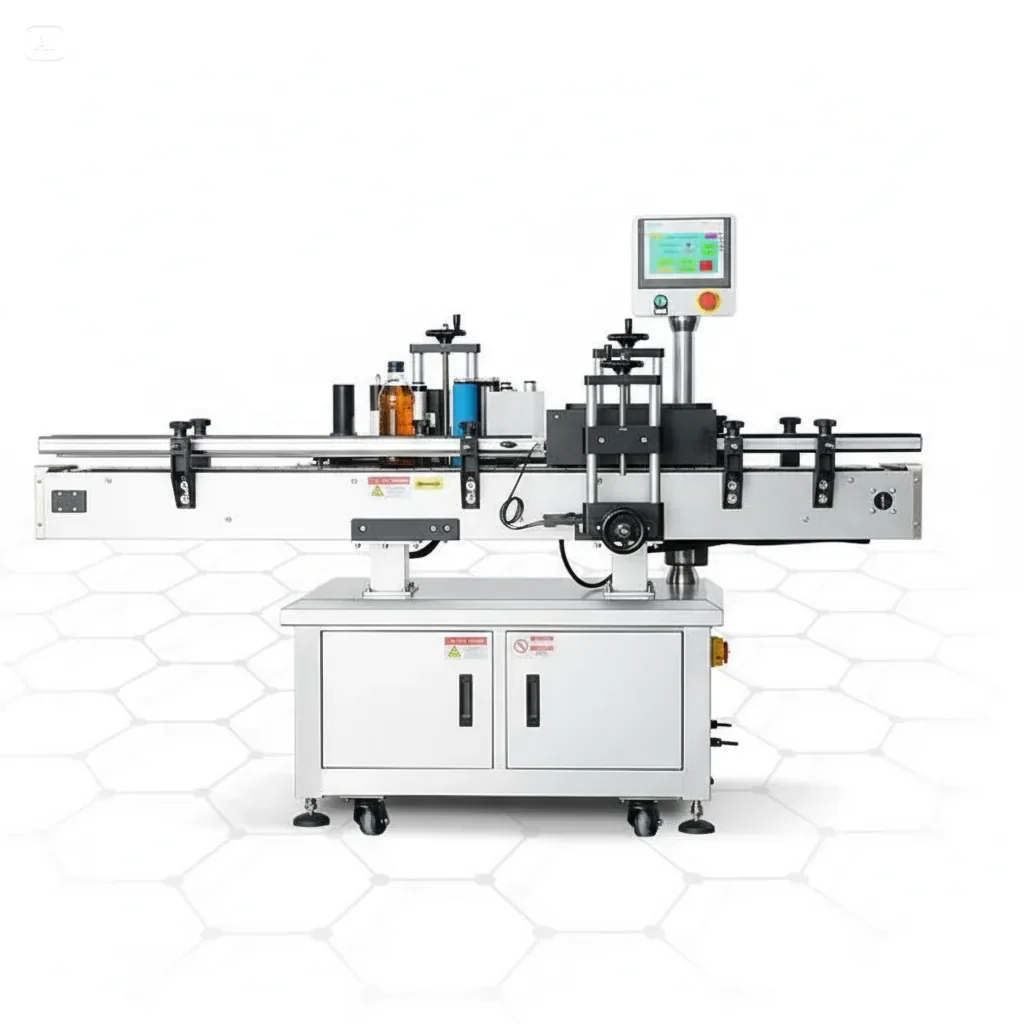
Technical specifications
Final machine dimensions, throughput and options are confirmed against the bottle, label roll, samples and surrounding line equipment.
Integration
Lancing can supply labelling machinery as a standalone unit or integrate it into broader packaging lines with filling, capping, coding, conveyors, inspection and end-of-line handling.
Buyer questions
Send container dimensions, label details and target output. Lancing can normally narrow the correct labelling route from samples, photos and line information.
Yes. Lancing can discuss integration with filling, capping, coding, inspection, conveyors and end-of-line handling.
Samples are strongly recommended because bottle shape, taper, label material, roll direction and handling stability affect the final configuration.
Speak to Lancing
Send samples, label details and speed requirements so the machine can be matched to your container rather than selected from a generic model number.
This added section gives the practical selection detail searchers need without changing the existing machine page above.
The Automatic Wraparound Labeller route is most relevant to round bottles, jars, cans and other cylindrical containers where the label is applied as the product rotates. It should be checked against the actual container rather than only a drawing, because presentation, base stability and label surface can change how consistently the label is applied.
Selection normally depends on bottle rotation, wrap pressure, label start point and label wipe-down. Where clear labels are involved, Lancing should review the label material and backing liner so the sensing method is suitable before the machine is ordered.
Changeover planning should include bottle guides, label roll loading, sensor position, label height, job memory or operator settings where fitted, and safe access to the label path for routine cleaning and roll changes.
| Information to send | Why Lancing needs it | Related page |
|---|---|---|
| Container dimensions, photos and sample bottles | Confirms whether the pack can be controlled repeatably through the labelling point. | Sample testing |
| Label width, length, gap, web width and core diameter | Confirms the label roll can feed and present correctly through the label head. | Label roll guide |
| Clear label, metallic label or unusual liner details | Identifies whether specialist sensing or extra setup checks are required. | Clear-label sensing |
| Batch code, date code or barcode position | Shows whether coding needs to be integrated before, during or after label application. | Coding integration |
| Target output and upstream/downstream equipment | Helps match the labeller to the rest of the line and avoid bottlenecks. | Compare labelling routes |
If the container has a flat front panel, oval body or needs separate front and rear labels, review the front and back labelling page before choosing a wraparound route.
Use the buyer guide to compare container shape, automation level and label position before confirming the preferred route.
Actual placement-accuracy trial results, customer case studies and sample test data should only be published when Lancing has verified first-party evidence. In the absence of recorded figures, the safe approach is to define a test pack, label material, target output and acceptance criteria before running samples.
Send product photos, label details, line layout and the output you need.
Automatic line questions
An automatic wraparound labeller should be specified as part of a product-flow system, not only as a label head on a conveyor. Browse the bottle labelling questions hub for deeper technical answers.
Provide conveyor direction and height, available line space, bottle arrival pattern, upstream and downstream machine behaviour, required start/stop signals and any coding or inspection equipment. The labeller must receive separated, stable bottles and respond predictably when neighbouring equipment stops. See the packaging-line integration guide.
Record every repeatable setting that affects a format, including guides, sensor positions, label-head position, wrap pressure and relevant control values. Recipes can store electronic values, but they do not replace physical reference points or a first-off check. A format sheet should let a trained operator return the machine to a known starting condition.
The control sequence should prevent labelled bottles accumulating into the application zone or unstable packs being compressed. The agreed response may involve stopping infeed, holding product upstream or completing a controlled cycle before stopping. The correct sequence depends on the full line and should be tested with the actual interface logic.
Choose the smallest, largest, least stable and most presentation-critical bottles, together with the most demanding label constructions. Include formats that challenge sensing, rotation, overlap or changeover rather than demonstrating only an easy nominal pack. Use the existing FAT checklist to record the agreed evidence.
Send a line layout, representative bottles, label rolls and the expected control interfaces for an application review.
Acceptance should cover more than label placement during a continuous run. It should also define product spacing, upstream and downstream stops, guard boundaries, emergency-stop coverage, recipe recovery, missing-label response and the status of bottles left inside the machine after a fault.
Agree the intended use, format list, line signals, fault cases, approved samples and who supplies each interface.
Close or allocate open actions, record software and recipe versions, and confirm manuals, drawings and the applicable declaration.
Verify utilities, guarding, integrated stop/restart behaviour, operator access, training and the final installed condition.
Use the compliance and documentation guide with the existing FAT checklist.
Send the line layout, controls description, format list and acceptance responsibilities with the application samples.
An automatic wraparound project should combine the physical label path with bottle spacing, conveyor behaviour, replenishment, stops and downstream acceptance. A circumference calculation alone does not define the automatic machine.
Record circumference at the intended zone, usable label height, gap or overlap, bottle rigidity and the way the container will be stabilised while it rotates.
Convert the batch and available hours into an average shift rate, then allow for productive running time, roll changes, format changes and normal line interruptions.
Define infeed spacing, starve/block response, missing-label detection, coding or inspection, reject logic and the acceptance evidence required at FAT and site.
Prepare the figures with the bottle label size calculator and throughput calculator, then validate them with production samples and the line layout.
Send batch data, bottle and roll measurements, conveyor details and the required fault response.
Fix the complete construction reference, supplied label count, unwind direction and liner specification before assessing a run. Keeping only the artwork dimensions constant leaves several important variables uncontrolled. A replacement film or liner may behave differently even when the bottle and artwork look unchanged.
Keep an approved reel identifier against the machine recipe. Trial fresh and part-used reels within the supplier-approved operating range, observing stable unwind, clean release and liner take-up. Do not increase the reel diameter or mass beyond the confirmed machine specification to gain runtime.
Compare paper and film construction checks and batch reel consumption. For booklet labels, ask for a separate application assessment rather than treating the existing wraparound specification as blanket approval.
Popular searches
The label head, bottle-control system and conveyor must operate as one process. A machine can apply a label correctly in isolation yet still underperform when bottles arrive touching, unstable or at a speed that does not match the surrounding equipment.
Define the upstream machine, conveyor height and direction, expected product spacing and the condition of the bottle at transfer. Accumulated bottles may need controlled separation before the label sensor and wrap station. Tall, lightweight or flexible packs should be reviewed in both normal and worst-case production states.
Confirm the complete label-roll specification, the required label-height datum, start position, overlap or gap and any transparent, metallic or unusual construction. The label head, sensor and wrap control should be tested using production-equivalent labels rather than artwork proofs alone.
State whether a date, batch, barcode or other code is printed before or after application, the available print area and how the code will be checked. Allow physical space, guarding, controls and reject handling for any inspection equipment at the design stage.
Define the downstream conveyor, accumulation or packing process and what should happen after a stop. Restart behaviour matters because bottles already inside the machine must remain correctly spaced and labels already dispensed must not create avoidable waste.
| Project check | Evidence to agree | Reason |
|---|---|---|
| Format range | Representative smallest, largest, tallest, lightest and least stable containers. | Proves that guides, label-head height and wrap control cover the real product family. |
| Label-roll range | Production-equivalent rolls for the widest, longest, clearest or otherwise most demanding labels. | Confirms web tracking, sensing, dispense and wipe-down across the stated label family. |
| Placement definition | Approved labelled sample or marked bottle showing height, start position and overlap or gap. | Creates a shared visual standard for setup and acceptance. |
| Changeover | Documented sequence, settings or recipes and first-off checks for the agreed formats. | Tests practical repeatability rather than only the initial factory setup. |
| Line interface | Layout, conveyor data, control signals, coder and inspection positions, and stop/restart sequence. | Reduces integration risk between the labeller and surrounding machinery. |
Do not select only the easiest bottle. Include the pack most likely to expose a handling problem: the least stable base, the longest label, the clearest material, the greatest taper or the format with the tightest presentation requirement. This helps Lancing determine whether the standard wraparound route is suitable or whether additional product control is required.
Use the wraparound setup guide for changeover inputs, the roll-direction guide before print approval and the sample-testing checklist for the acceptance pack.
Flat, oval and square bottles that need independent front and rear labels normally belong on a twin-side labeller. Smaller batches may be better served by the semi-automatic wraparound machine, while restricted layouts can favour the compact automatic route.
Send the line layout, bottle range, label-roll data, required presentation and the difficult production samples.
Link the approved sample, label-roll identity, format settings and line sequence so that site commissioning tests the same application demonstrated before dispatch.
Agree representative formats, production-equivalent rolls, placement reference, changeovers and line interfaces. Use the FAT checklist.
Confirm access, verified utilities, conveyor direction, control ownership and operator space with the site preparation guide.
Record settings, first-off approval, stops, restarts, changeover, training and open actions using the commissioning checklist.