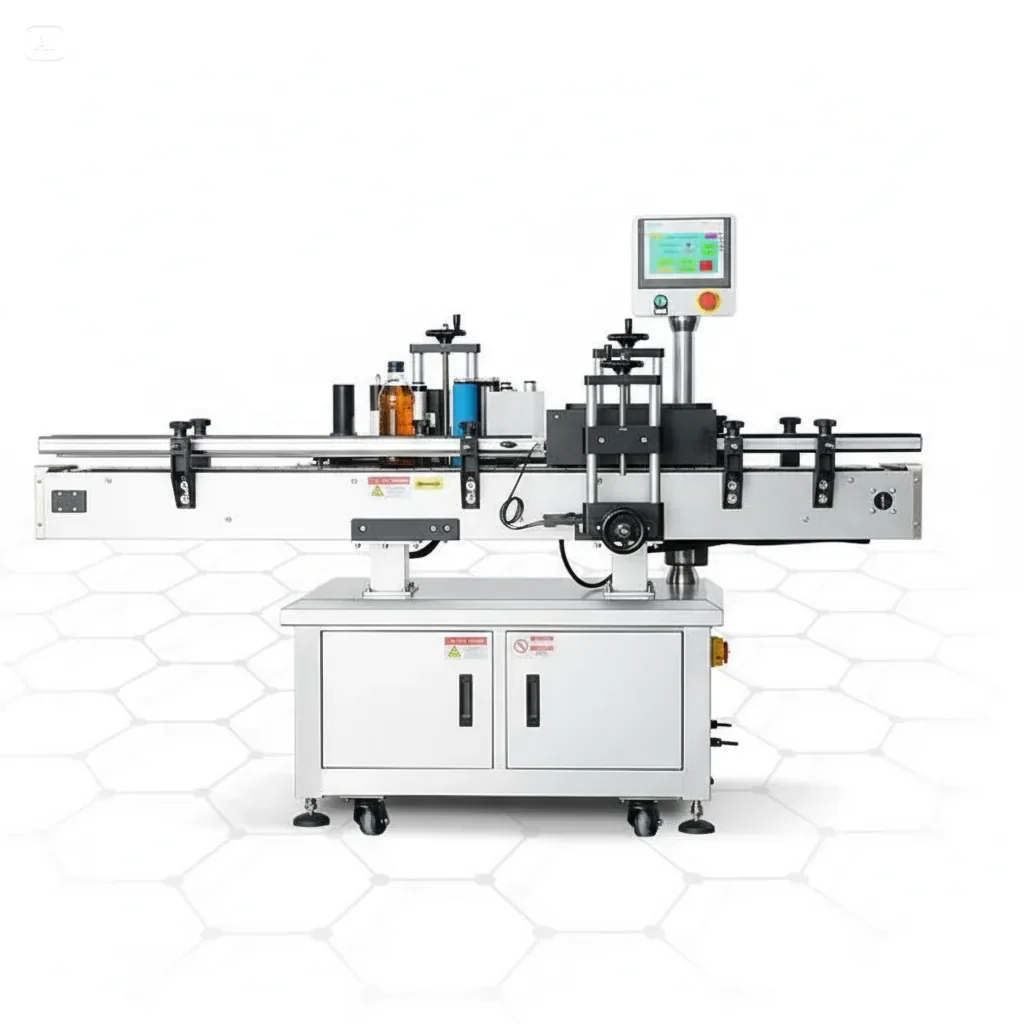
Round bottles
Automatic Wraparound Labeller
Inline label application for cylindrical bottles, jars and cans.
View machine
Label roll guide
Understand the roll details that affect bottle labeller setup, sensing and label placement.
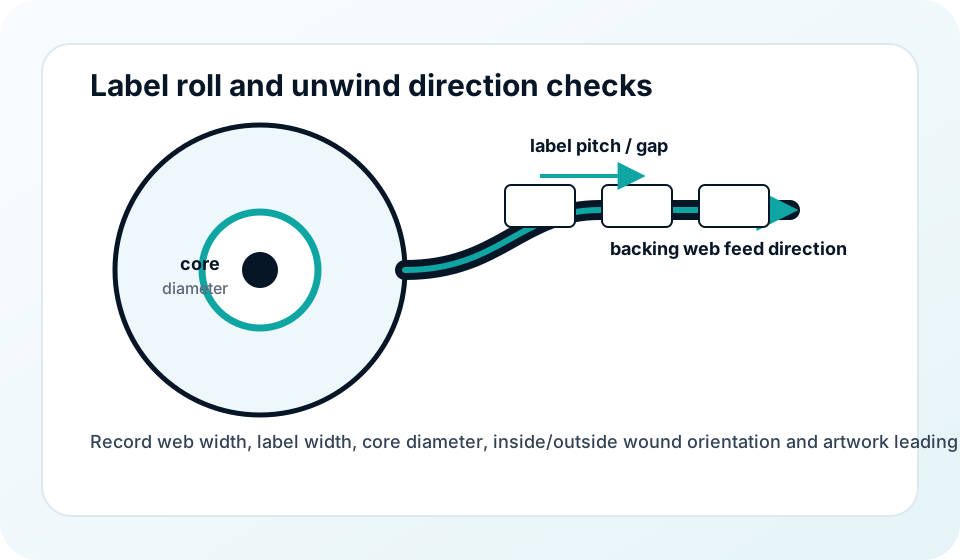
Bottle labelling machines use roll-fed labels, so roll direction, label orientation, core size, web width and label gap need to match the label head and product presentation. Incorrect roll format can create unnecessary setup issues.
When requesting a quote, it is useful to send a label roll drawing or a photograph showing unwind direction and label orientation.
Options include semi-automatic bench labellers, compact automatic labellers, inline wraparound systems, twin-side front and back labellers, top and bottom label applicators and integrated conveyor systems. The correct route depends on container shape, label position and production target.
Recommended routes
Select the closest machine route below or send samples for a final specification.
Round bottles
Inline label application for cylindrical bottles, jars and cans.
View machine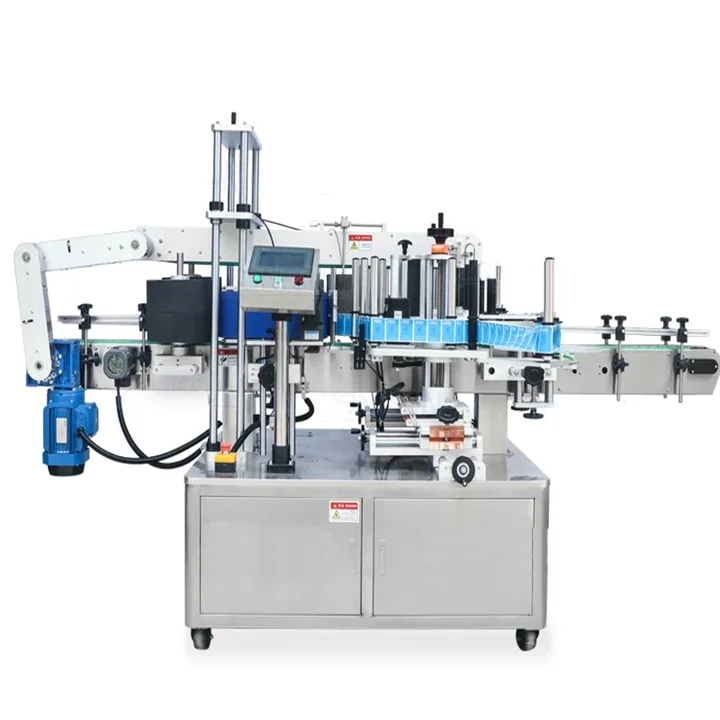
Two-sided labels
Front and back labelling for flat, oval, square and shaped containers.
View machine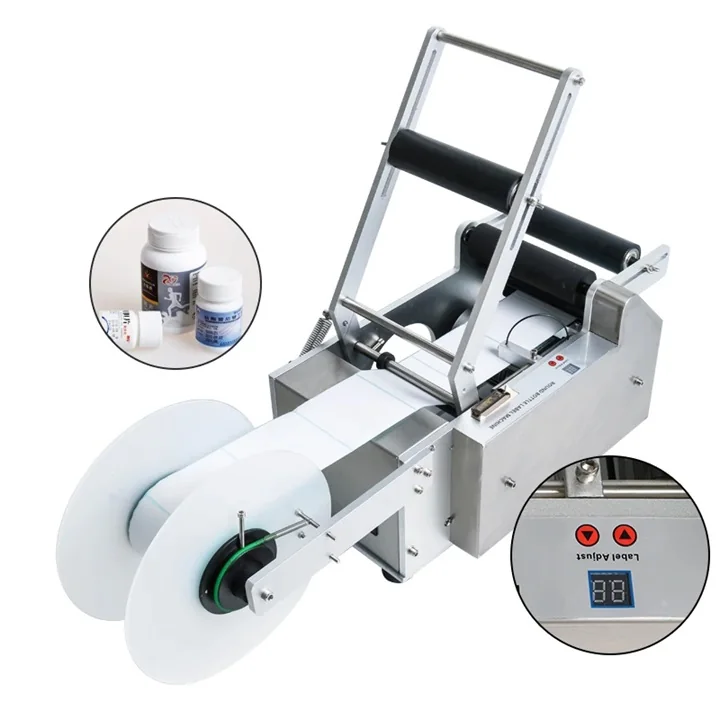
Short runs
Bench-top bottle label application for smaller production batches.
View machineBuyer questions
The suitable route depends on container shape, label position, label roll, required output and whether the machine is bench-top, compact automatic or fully inline.
Bottle or container dimensions, photographs, label size, roll direction, label material, target output and any coding or conveyor requirements are useful for a fast recommendation.
Clear labels may be possible when suitable transparent label sensing is specified and tested against the real label material and backing paper.
Automatic systems can usually be specified with conveyors and surrounding filling, capping, coding or inspection equipment when line details are supplied.
Related searches
Roll format is one of the easiest details to get wrong before the labeller is chosen. Record the core diameter, inside or outside wind, label gap, web width, liner type, label material and the artwork leading edge so the label presents correctly to the applicator.
| Question | Engineering reason | Next action |
|---|---|---|
| Is the container round, flat, oval, square or tapered? | Shape determines whether rotation, side guiding or top/bottom transfer is the main control point. | Compare machines |
| Is the label clear, metallic, small, wraparound or front/back? | Label material and gap determine sensing and setup checks. | Review sensing |
| Has the label roll already been printed? | Roll direction and artwork orientation may affect machine compatibility. | Check roll direction |
| Is presentation critical? | Premium labels, front/back matching and clear labels should be checked with samples before final specification. | Prepare samples |
For round bottles, start with wraparound labelling. For flat, oval and square containers, review front and back labelling. When in doubt, send photos and dimensions and Lancing can identify the better machine route.
Send bottle samples, label details or photos and the production target so Lancing can narrow the route.
“Outside wound” or “inside wound” alone is not a complete roll specification. The machine supplier and label printer need the same reference for feed direction, artwork leading edge, liner, core and the side of the web presented to the label head.
| Roll term | What to record | Why the labeller needs it |
|---|---|---|
| Label width and length | Use the finished die-cut dimensions and identify which dimension runs across the web and which runs in the feed direction. | Sets the required label-head width, dispense length and available application area. |
| Web width | Measure the complete backing liner from edge to edge, not only the printed face label. | Confirms that the web fits the reel path and tracks correctly through guides and rollers. |
| Pitch and gap | Record the repeat distance from one label to the next and the physical gap or other registration feature. | Allows the sensor and feed length to be configured from the real die-cut pattern. |
| Core diameter | State the internal diameter and confirm the core is suitable for the machine mandrel. | Prevents an otherwise correct roll from being physically incompatible with the reel holder. |
| Roll outside diameter | State the maximum finished roll diameter supplied by the printer. | Checks available reel clearance, roll weight and practical change frequency. |
| Unwind direction | Show whether labels face inward or outward and provide a diagram or physical sample showing the web leaving the roll. | Determines how the roll mounts and whether the label face reaches the dispense edge in the correct orientation. |
| Artwork leading edge | Mark which artwork edge reaches the dispense point first and which side should appear at the top of the container. | Prevents labels being supplied upside down, back to front or with the wrong leading edge for the application. |
| Face stock, liner and special finishes | State paper or film construction, transparency, metallic areas, varnish, liner type and any printed registration mark. | Supports sensor selection, web handling and realistic sample testing. |
A useful format sheet includes the label-roll code, core and web dimensions, unwind illustration, label-head height, sensor position, feed length or recipe reference and an approved first-off bottle. Where front and rear labels use separate rolls, keep a separate record for each head.
The physical roll should also be checked for telescoping, loose winding, damaged edges, splices and liner curl before setup. These conditions can change tracking even when the nominal dimensions are correct.
| Setup symptom | Roll information to recheck | Related guide |
|---|---|---|
| Artwork is upside down or leads with the wrong edge | Unwind drawing, artwork leading edge and web travel direction. | Unwind checklist |
| Sensor detects the liner inconsistently | Gap, transparency, metallic or varnished areas, liner and registration feature. | Clear-label sensing |
| Web drifts through the label head | Web width, roll build, damaged edges, core alignment and reel condition. | Application problems |
| Replacement rolls behave differently | Supplier drawing, liner specification, winding tension and approved roll reference. | Sample-testing checklist |
For the machine decision, compare the wraparound labelling and front/back labelling owner pages. Send the printer's drawing and a representative roll with the bottle samples.
Provide the label dimensions, web, core, unwind illustration, face material, liner and the finished container orientation.
Artwork approval should identify the leading edge, inside or outside winding, face orientation, web width, core, roll outside diameter, pitch and sensing feature. This prevents a visually correct design arriving in an unusable winding arrangement.
Complete the label-roll specification worksheet and retain it with the approved artwork and machine format record.